

Why the AI Governance and AI Assurance distinction now matters commercially
When I talk to compliance leads and Heads of AI Risk at regulated enterprises, the question has shifted. It used to be: "Do you have an AI governance policy?" Now it is: "Can you show me what this system did, what was logged, and whether it stayed within policy?"
That is not the same question. And it is not one a governance programme, on its own, can answer.
The commercial consequence is already visible. Procurement teams are separating AI governance and AI assurance into distinct line items in vendor reviews. Regulators are doing the same. The direction of travel across the EU AI Act, ISO/IEC 42001, and FCA model risk guidance is consistent: policies are necessary, but evidence of behaviour is what gets tested at audit.
Governance manages the policy layer. Assurance evidences that the policy is being met. One is structural, the other is operational. Enterprises that treat them as the same category are about to find that auditors do not.
The constraint persistence gap whether a model maintains its operational boundaries under real world pressure is still not captured by standard benchmarks.
What AI governance does, and where it stops
AI governance is the organisational control layer. It covers policies, committees, risk registers, model documentation, approval workflows, and accountability lines. That work is necessary. It gives boards and internal audit a defensible structure for who owns AI risk and how decisions get made.
The limit is straightforward: governance is mostly document-led and point-in-time. It tells you what the organisation intended to do. It does not prove what the system actually did in production.
A quarterly governance committee cannot answer operational questions about a live model:
Did this agent stay within its declared parameters last week?
Has model behaviour drifted since the last evaluation?
What was blocked, escalated, or passed through, and why?
In regulated settings, those are the questions auditors and supervisors are now asking. Governance stops at the boundary of documented intent. What comes next requires an operational capability, not a policy artefact.
What is AI Assurance?
Runtime AI Assurance is the difference between a "good guess" and "hard proof."
While traditional testing happens before a product is launched (static testing), Runtime Assurance happens while the AI is actually talking to customers or making decisions.
Think of it as a "Black Box Flight Recorder" for AI agents
Pillar | What it does | Why it matters |
Active Guardrails | Inspects inputs and outputs in milliseconds. | Stops "jailbreaks" or data leaks before they happen. |
Drift Detection | Monitors if the AI’s behavior is changing over time. | Ensures the AI doesn't become biased or "hallucinate" more as it encounters new data. |
Audit Traceability | Records exactly why an AI made a specific decision. | Vital for legal compliance and proving the "human-in-the-loop" didn't fail. |
What AI assurance adds
AI assurance is the operational capability to test, monitor, enforce, and continuously evidence that an AI system is staying within its declared governance parameters, across pre-production, runtime, and post-deployment.
The core contrast: governance produces a policy record. Assurance produces an evidence trail.
In practice, AI assurance covers four things a governance function cannot deliver on its own:
Pre-production testing against defined risk scenarios, including reasonably foreseeable misuse
Runtime policy enforcement at the inference layer, so non-compliant outputs are blocked or escalated rather than caught in retrospective review
Drift monitoring to detect when a model's behaviour shifts after deployment
Audit-ready compliance artefacts, including time-stamped logs, blocked output records, and reports mapped to specific regulatory obligations
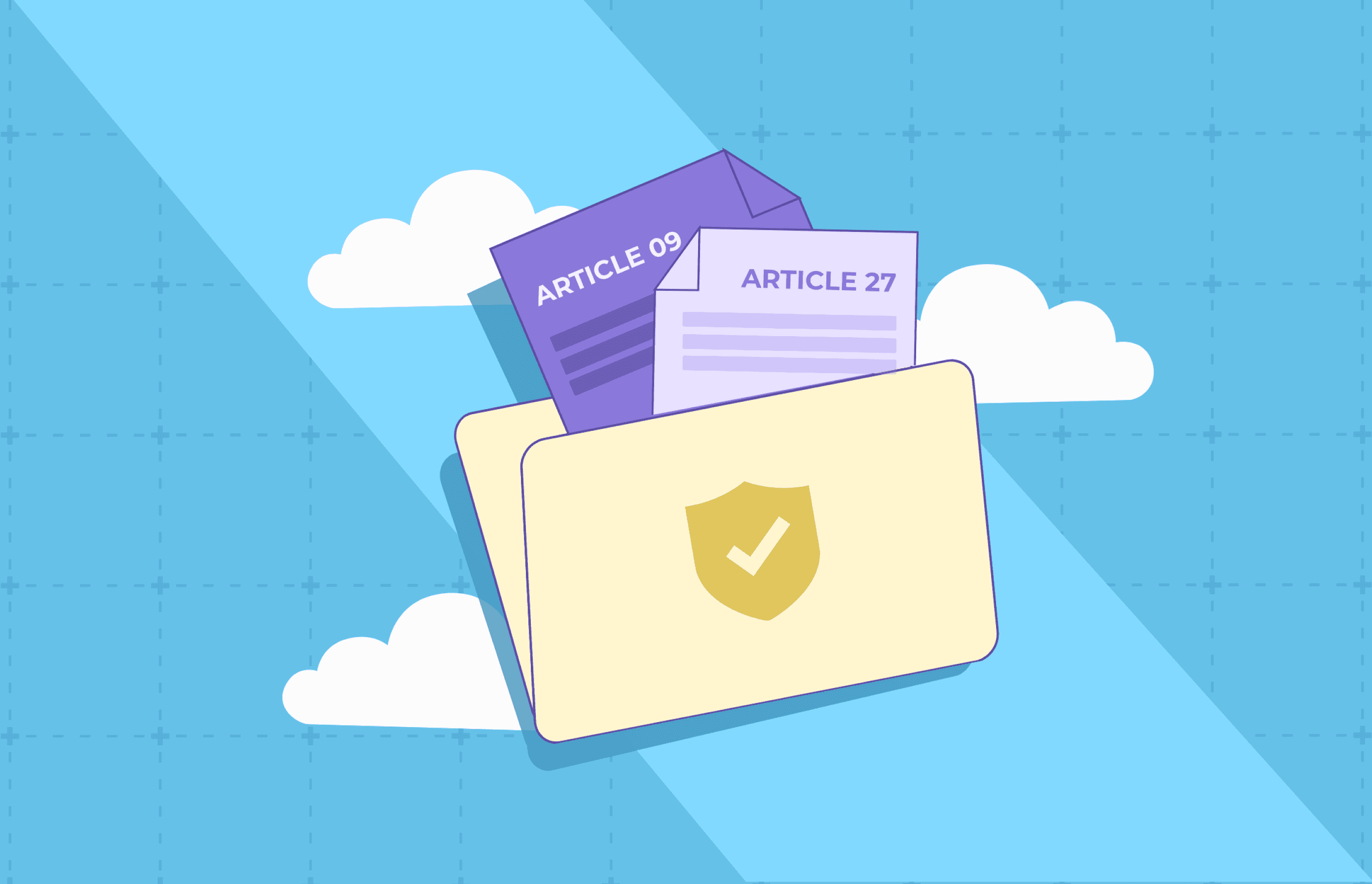
This is exactly what the EU AI Act requires from a technical standpoint. Article 9 mandates a risk management system that is a "continuous iterative process" running across the entire lifecycle, requiring regular review and updating. Article 72 requires providers to "actively and systematically collect, document and analyse" performance data throughout the system's lifetime to evaluate continuous compliance.
Those words, continuous, active, systematic, throughout the lifetime, describe an operational function. A governance document does not satisfy them.
Governance vs Assurance: side by side
The table below is the framing I use with compliance leads when they ask where their current AI governance platform stops and where an assurance capability needs to begin.
Dimension | AI Governance | AI Assurance |
|---|---|---|
Primary output | Policies, standards, accountability structures | Continuous evidence trail, logs, test results |
Cadence | Periodic review | Ongoing across the full lifecycle |
Main question answered | Who owns the risk, and what is the policy? | Did the system behave within policy in practice? |
Typical artefacts | Committee minutes, model cards, risk registers | Behavioural logs, control records, drift reports |
Primary owners | Risk and compliance | Engineering, risk, and compliance together |
Regulatory value under EU AI Act | Necessary foundation | Operational proof of continuous compliance |
These are not competing categories. They are sequential layers. Governance sets the rules. Assurance proves those rules are being met. Remove either layer and the other does not stand on its own.
Which enterprises need both, and why
Any enterprise deploying high-risk AI under the EU AI Act needs both layers. Financial services firms, insurers, healthcare providers, and any organisation running agentic systems inside regulated workflows need them most urgently.
The reason is straightforward. Once AI moves from advisory output to operational action, the failure mode changes. It is no longer a bad answer. It becomes a material control failure, a potential customer harm, or an audit problem with no usable evidence trail to reconstruct what happened.
Ownership also shifts. Governance can sit primarily with risk and compliance. Assurance cannot. It requires engineering to operate monitoring and controls, risk to define thresholds and failure conditions, and compliance to map the evidence trail to specific regulatory obligations.
When those three functions work separately, assurance breaks down. When they work together, the organisation has something more useful than a policy statement: it has proof that the policy is being enforced in production, in real time, against the systems that matter.
Bottom Line
AI governance and AI assurance should be treated as separate but connected capabilities. Governance tells you who is accountable and what the rules are. Assurance shows whether those rules are being followed by live systems over time.
That distinction is already shaping audit conversations, vendor reviews, and budget decisions across regulated industries. If your current stack can describe your AI policy but cannot evidence system behaviour in production, you do not have the full control layer that supervisory review is likely to expect.
At Disseqt, we built the platform specifically for the assurance evidence requirement: continuous monitoring, runtime policy enforcement, drift detection, and audit-ready reporting across the AI lifecycle. If that is the gap you are working to close, it is worth a conversation.
FAQs
What is the difference between AI governance and AI assurance?
AI governance is the policy and accountability layer: the committees, risk registers, model documentation, and approval processes an enterprise puts in place to manage AI risk. AI assurance is the operational evidence layer: continuous testing, runtime policy enforcement, drift monitoring, and logged behavioural records that show the AI system is actually staying within those policies. Governance produces a policy record. Assurance produces an evidence trail.
Does the EU AI Act require AI assurance?
The Act does not use the term "AI assurance", but Article 9 and Article 72 require capabilities that only an assurance layer can deliver. Article 9 mandates a continuous, iterative risk management process across the full system lifecycle, including reasonably foreseeable misuse. Article 72 requires active post-market monitoring that systematically collects and analyses performance data after deployment. Neither obligation can be satisfied by policy documentation alone.
Can an enterprise rely on AI governance alone?
Not under EU AI Act Article 9 and Article 72, or under FCA model risk management expectations. Each requires continuous, evidenced behaviour rather than point-in-time documentation. Governance establishes accountability and policy intent, which is necessary. But auditors and supervisors increasingly ask for runtime evidence, drift records, and logged enforcement actions that a governance committee cannot generate.
Who should own AI assurance inside the enterprise?
AI assurance is owned jointly by engineering, risk, and compliance. Engineering operates the monitoring and control infrastructure. Risk defines thresholds and failure conditions. Compliance maps the evidence trail to specific regulatory obligations. When any single function holds assurance alone, the layer breaks down, because no single team holds all the inputs required to make it work.