
What is AI observability?
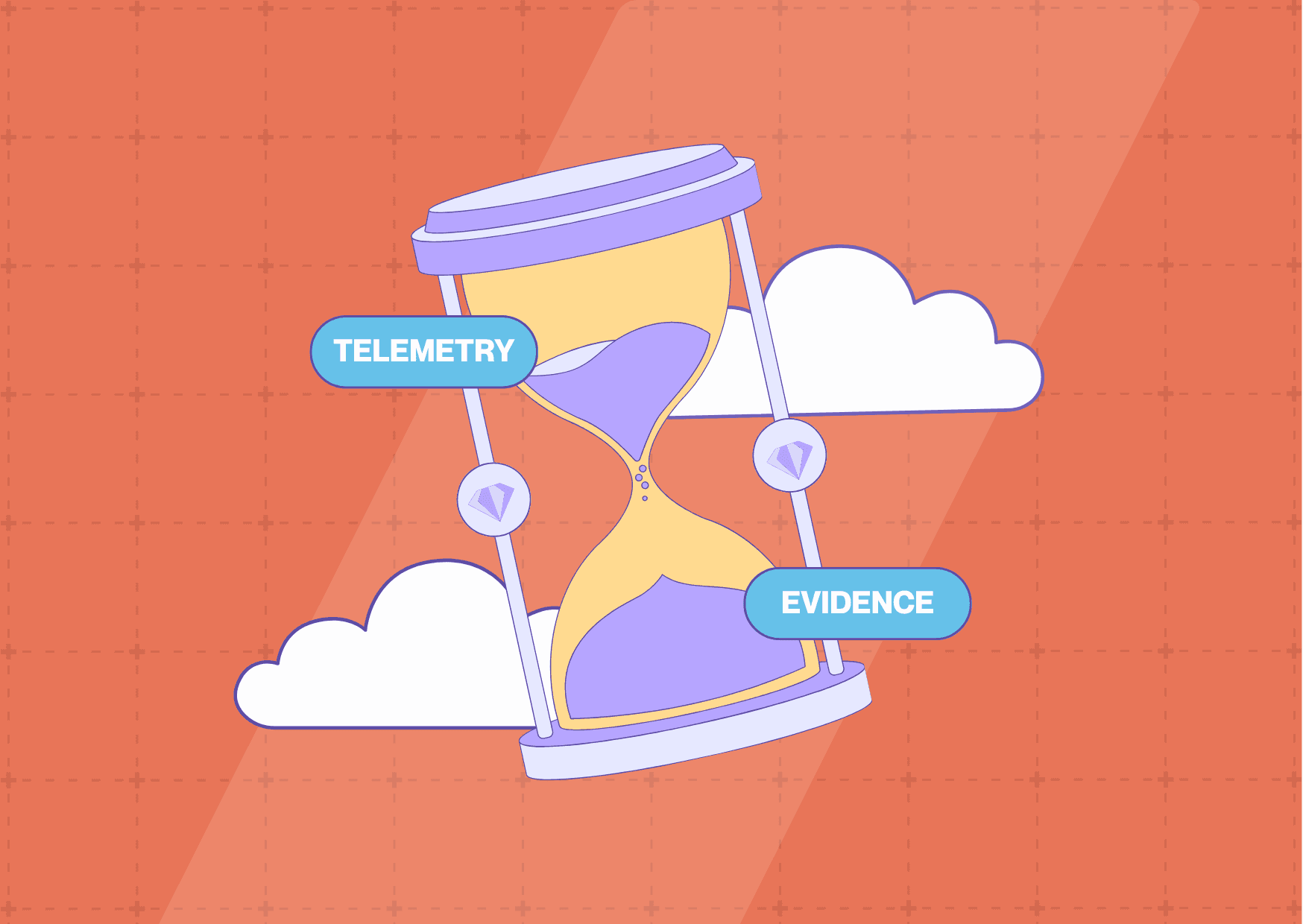
AI observability is the discipline of capturing telemetry from AI systems running in production. Traces of model calls, latency metrics, token usage, prompt and response payloads, vector retrieval steps, agent tool invocations, drift signals, and quality measurements.
Once a model is in production, the team operating it needs runtime visibility into how it is behaving. The observability category produces the raw production behavioural record any team operating AI at scale needs.
AI observability is essential infrastructure. It is not, on its own, governance.
What is AI governance?
AI governance is the discipline of deciding what an AI system is allowed to do, enforcing those decisions in real time, and producing the evidence an internal risk committee or external regulator will accept as proof of control.
Governance operates at the policy layer. It defines acceptable behaviour for a given use case, tests the system against that envelope before deployment, enforces it at runtime, and assembles framework-specific evidence aligned to the EU AI Act, NIST AI RMF, FCA model risk expectations, and ISO 42001.
Governance is what the Disseqt Assurance Layer provides. Disseqt is the only assurance layer built for the full enterprise AI lifecycle on one platform: testing, monitoring, policy enforcement, audit trails, and compliance reporting unified.
How the two layers fit together in the AI infrastructure stack
Picture the enterprise AI stack as horizontal layers.
At the bottom: the model and inference layer. Foundation models, fine-tuned variants, vector stores, retrieval systems, agent frameworks, and the gateway routing traffic to them.
Above that: AI observability infrastructure. Traces, metrics, logs, and drift signals flow out of the model layer and into the observability category.
Above observability: AI assurance. This is where Disseqt lives. The assurance layer reads the production behavioural data observability produces, applies policy to it, runs runtime monitoring of its own, enforces guardrails on AI behaviour in real time, and assembles the audit-ready evidence the regulator expects.
Above assurance: the enterprise governance function. Chief risk officer, model risk team, internal audit, the board AI committee. Assurance hands them the evidence. They make the institutional decisions.
For years, enterprises bought these as two separate purchases: an observability tool from one category, a governance and compliance tool from another. With Disseqt they don't have to. The platform runs continuous runtime monitoring on the same engine that performs policy enforcement, so the production behavioural record, the policy decisions, the enforcement actions, and the audit evidence all come from one place.
OpenTelemetry: the integration surface between observability and assurance
Most mature AI infrastructure standardises on OpenTelemetry for traces, metrics, and logs. OTel is the open CNCF standard for telemetry across distributed systems, and the AI observability category has converged on OTel-shaped traces for model calls, agent steps, and tool invocations.
Disseqt is OpenTelemetry-compatible by design. The platform ingests OTel-shaped traces from any existing observability stack and feeds them into its runtime policy enforcement and evidence assembly layers. A team already invested in OTel does not rip it out to add assurance. They add assurance on top.
Disseqt also runs its own continuous runtime monitoring on the same low-latency classifier engine that handles enforcement. A team with no observability investment yet still gets the production behavioural record they need, from one platform. The OpenTelemetry interop is there for teams that already have observability infrastructure. It is not a prerequisite for running Disseqt.
What assurance does that observability does not
There are four things the observability category does not cover. They are four things the Disseqt Assurance Lifecycle was built to do.
Pre-production adversarial testing
Observability watches systems that are live. It does not adversarially test a model before deployment.
Test & Detect, the first Disseqt pillar, runs 65 validators across safety, security, fairness, and reliability against a model before it ever sees production traffic. It runs 84 jailbreak techniques to find the failure modes a regulator will ask about. The output is a pre-deployment risk profile the model risk team signs off against.
Observability requires production telemetry to function. Pre-production is before production. Assurance owns that phase.
Runtime policy enforcement
Observability records what happened. It does not block a non-compliant action at the moment of execution.
Protect & Enforce, the second Disseqt pillar, sits in the runtime path and applies policy in real time. If an agent is about to take a tool action that violates policy, assurance blocks it. If a model is about to return a response that breaches the use-case risk envelope, assurance intercepts it. If an AI agent drifts from its declared behavioural specification, assurance detects it and applies the configured response.
Observability is a passive layer by design. It exists to see, not to act. Assurance is an active layer. It exists to decide. Both jobs are required. Observability alone leaves you with the breach in the trace and no prevention.
Observability without enforcement is just expensive logging.
Runtime monitoring built for policy, not just dashboards
Observability captures telemetry. Assurance interprets that telemetry against policy in real time.
Disseqt runs continuous monitoring on the same engine that performs enforcement. Toxicity scoring on live conversations. Drift detection on agents operating outside scope. Violations get blocked, escalated, or routed to human review. The output is not just a dashboard. It is the runtime control plane.
Audit-ready regulatory evidence
Observability produces raw traces. Regulators do not accept raw traces.
Prove & Comply, the third Disseqt pillar, takes the production behavioural record and assembles it into framework-specific evidence aligned to the EU AI Act, NIST AI RMF, FCA model risk expectations, and ISO 42001. The output is the artefact a regulator, an internal auditor, or a board AI committee will accept as proof of control.
This translation step, from raw telemetry to regulator-accepted evidence, is the assurance job. It is the layer above.
What observability does that assurance does not
The boundary runs both ways. Where a team has already invested heavily in observability infrastructure, that telemetry is a clean input into the assurance layer. Disseqt reads it via OpenTelemetry rather than asking the team to re-instrument.
The two categories are mutually compatible, not in competition. A team that already runs a production-grade observability stack adds assurance on top. A team with no observability investment yet gets both layers on the Disseqt platform.
Where the observability category fits
The observability category sits at the infrastructure layer of the AI stack and produces the production behavioural record any team operating AI at scale needs. The buyer is typically AI platform engineering.
AI assurance sits above. The buyer is typically AI risk and compliance, working alongside that platform team, with the chief risk officer and the board AI committee signing off. Both buyers exist in the same enterprise. Both layers are required. The architecture is complementary by design.
The right question is not which category to choose. It is how the layers feed each other. The answer is OpenTelemetry, with assurance applying policy, monitoring, enforcement, and evidence on top.
What this means for the platform team
The old buying pattern was two stacks. An observability tool to capture runtime telemetry, and a separate governance or GRC tool to handle policy, testing, and evidence. Two contracts, two integrations, two control planes, two budgets.
With Disseqt that pattern collapses. One platform handles pre-deployment testing, runtime monitoring, real-time policy enforcement, audit trails, and compliance reporting. A platform team starting from zero gets the full assurance lifecycle without buying observability separately. A platform team already invested in observability keeps that investment and feeds it into Disseqt via OpenTelemetry.
You don't need to choose anymore. Continuous AI Governance used to require stitching categories together. The Disseqt platform is the unified answer.
Bottom Line
AI observability and AI governance used to be two purchases on the same enterprise AI stack. With Disseqt they aren't. Disseqt is the only assurance layer built for the full enterprise AI lifecycle on one platform: testing, monitoring, policy enforcement, audit trails, and compliance reporting unified. Full lifecycle. One platform.
FAQs
What is the difference between AI observability and AI governance?
AI observability captures traces, metrics, and logs from AI systems running in production. AI governance, which Disseqt delivers as AI Assurance, decides what an AI system is allowed to do, enforces those decisions at runtime, monitors runtime behaviour against policy, and produces the audit-ready evidence regulators accept. Observability is the infrastructure layer. Assurance is the policy layer above it. Both are required.
Do I need both AI observability and AI governance?
Both jobs need doing. The buying question is whether you need two separate tools to do them. With Disseqt you don't. The platform unifies runtime monitoring, policy enforcement, pre-deployment testing, audit trails, and compliance reporting on one stack. Teams that already have observability infrastructure can feed it in via OpenTelemetry. Teams that don't get the full stack from Disseqt directly.
How does AI governance work with OpenTelemetry?
Disseqt is OpenTelemetry-compatible by design. It ingests OTel-shaped traces emitted by the observability layer, applies policy to that telemetry in real time, enforces guardrails on AI behaviour at the runtime path, runs continuous monitoring, and assembles regulator-accepted evidence from the resulting record. OpenTelemetry is the integration surface between observability and assurance.
Does Disseqt do runtime monitoring or only governance?
Both, plus more. Disseqt is the only assurance layer built for the full enterprise AI lifecycle on one platform: pre-deployment testing, continuous runtime monitoring, real-time policy enforcement, audit trails, and compliance reporting unified. A team that already runs observability infrastructure can feed its OTel stream into Disseqt. A team without observability infrastructure gets the runtime behavioural record from Disseqt directly.
Can AI governance work without observability infrastructure?
Yes, with Disseqt. The platform produces its own runtime behavioural record alongside policy enforcement and evidence assembly. The recommended pattern at scale is still both layers together via OpenTelemetry, but a platform team starting from zero gets a complete assurance and monitoring stack from Disseqt alone.
Where does AI governance sit in the AI infrastructure stack?