
The missing layer in the enterprise AI stack
Most large organisations no longer have an AI experimentation problem. They have a control problem.
That gap is now easy to see in the data. Writer's 2026 enterprise AI survey found that 97% of executives say their company deployed AI agents in the past year, yet 75% admit their AI strategy is "more for show" than actual guidance. Adoption is already here. Operational discipline is not.
That is where the AI assurance layer sits.
AI governance defines policy. It sets accountability, risk appetite, oversight and approval processes. AI assurance does something else. It tests whether systems behave within those boundaries, applies controls while they are running, and produces the evidence trail needed for audit, procurement and regulatory scrutiny.
That distinction matters more now because enterprises are moving from AI ambition to AI exposure. Once systems are live, policy alone is not enough. Buyers need proof that controls were applied, monitored and retained over time.
Why enterprises are building it now
The short answer is regulation. The more important answer is continuous evidence.
Under Article 9 of the EU AI Act, high-risk AI systems must have a risk management system that operates as a "continuous iterative process" across the full lifecycle. Under Article 72, providers must establish and document a post-market monitoring system that actively collects and analyses performance and compliance data over the system's lifetime. That is not a one-off governance review. It is ongoing operational work.
This is why the infrastructure question is changing. The market no longer needs another layer of policy statements. It needs systems that can test, enforce, log and show what happened after deployment.
ISO/IEC 42001 is also worth being precise about. It is an AI management system standard, which means it helps organisations establish governance processes and continuous improvement at the organisational level. That matters. But certification does not, by itself, prove that a specific production system was tested against declared thresholds, protected at runtime, and continuously monitored with evidence ready for review. That remains an assurance problem.
The same direction is showing up outside the text of the Act. Deloitte's 2026 State of AI report says only one in five companies has a mature model for governance of autonomous AI agents. The control gap is no longer theoretical. It is already showing up in enterprise readiness.
What the assurance layer actually does
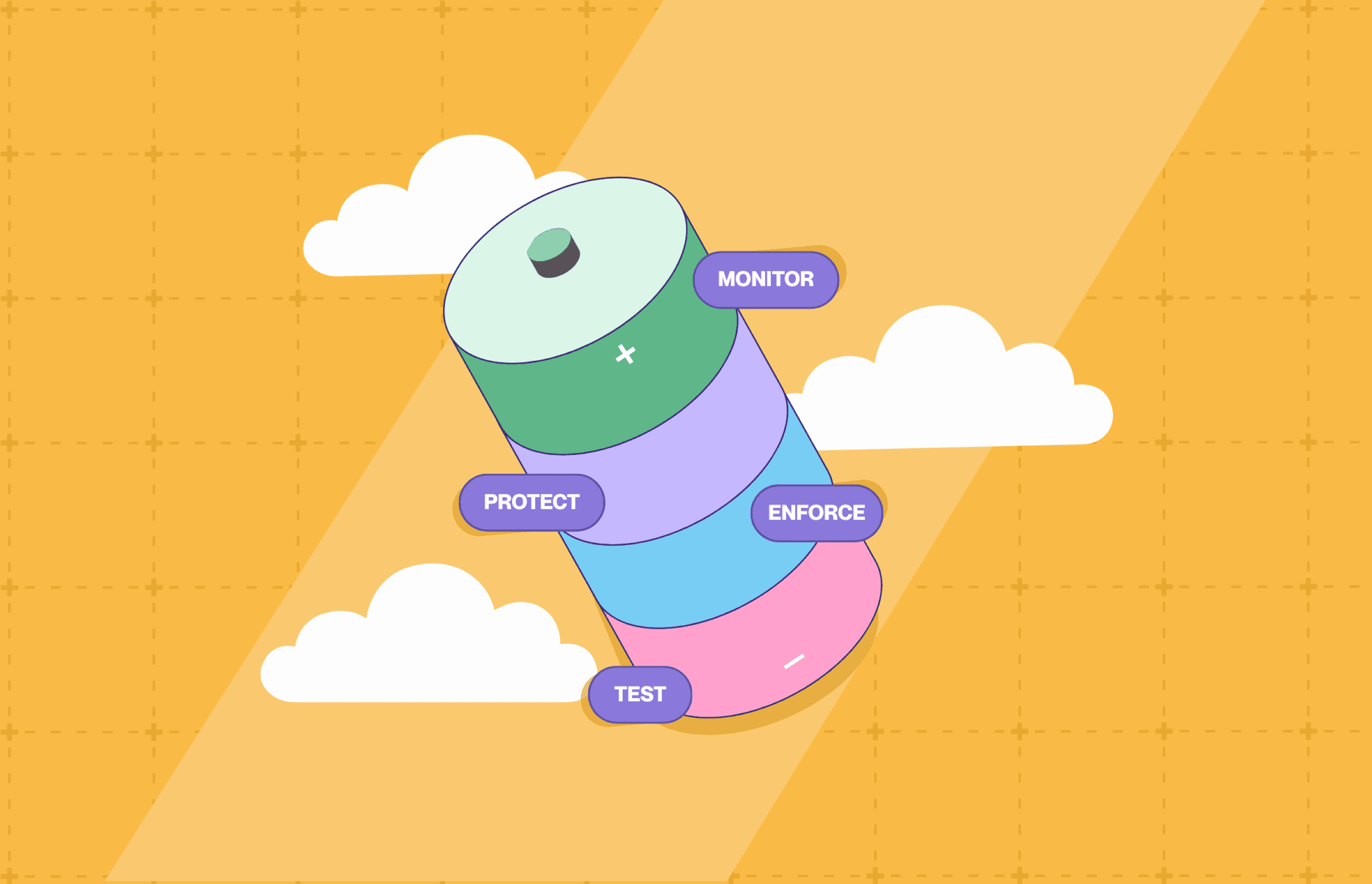
A working AI assurance layer connects four operational functions:
1. Test before deployment
Adversarial testing, prompt injection checks, tool misuse scenarios, failure mode analysis and threshold-based sign-off before a system goes live.
2. Enforce policy and compliance
Translating governance requirements into operational controls applied consistently across systems, models and workflows. That includes policy enforcement, threshold setting, escalation rules, human review triggers and controls that map system behaviour back to internal standards and external obligations.
3. Protect at runtime
Inline controls that can block, escalate or redirect unsafe or non-compliant behaviour while the system is operating.
4. Monitor in production
Continuous logging, control performance tracking, incident review, drift detection and reporting that can stand up to audit or internal challenge.
Each function depends on the others. Pre-deployment testing without policy enforcement leaves no clear control standard. Policy enforcement without runtime protection breaks in live conditions. Runtime protection without monitoring leaves no evidence trail. Monitoring without pre-launch testing turns production into the test environment.
That is why this category is separating from generic governance tooling. Enterprises do not just need a register of risks. They need an operational layer that can translate policy into controls, apply those controls in real systems, and prove over time that they held.
What buyers should evaluate
The useful test is simple: does the platform produce defensible evidence across the full lifecycle?
Buyers should ask:
Does it connect testing, policy enforcement, runtime control and production monitoring as one system?
Does it cover AI-native failure modes such as jailbreaks, prompt injection, unsafe tool use and agentic drift?
Does it generate time-stamped logs and artefacts that map to real obligations, not just internal dashboards?
Can it operate across different models, deployment patterns and enterprise environments?
Can engineering, risk and compliance teams work from the same evidence trail?
Most vendor claims still fall into one of two buckets: governance software that stops at policy, or testing tools that stop before runtime. The platforms that will win this category translate policy into enforceable controls and maintain evidence across the full lifecycle.
The gap between those two is where assurance infrastructure now has to operate.
Bottom Line
AI assurance is becoming a distinct infrastructure category because the conditions for it are now locked in. AI is in production. Regulatory expectations are shifting towards continuous risk management and post-market monitoring. The liability sits in the gap between governance policy and operational evidence.
Only one in five companies has a mature model for governing autonomous AI agents. That is the market. Most enterprises have the adoption without the controls, and the regulatory cycle is not going to slow down to let them catch up.
The enterprises that close that gap early will not just be more compliant. They will be easier to trust, easier to procure and harder to displace.
FAQs
What is an AI assurance layer?
An AI assurance layer is the operational system that tests, enforces policy, protects and monitors AI applications across their lifecycle. It sits between governance policy and live deployment, producing the evidence trail that shows whether controls actually worked.
Why are enterprises building an AI assurance layer now?
Because AI is already in production, while regulatory expectations increasingly require continuous risk management, monitoring and audit readiness. Governance on paper is no longer enough.
How is AI assurance different from AI governance?
AI governance defines policy, roles and oversight. AI assurance applies operational controls, enforces compliance requirements, tests systems against declared thresholds and creates evidence that those controls held in practice.
What should enterprise buyers look for?
Look for connected lifecycle coverage across testing, policy enforcement, runtime protection and production monitoring. Prioritise AI-native control capabilities, audit-ready evidence, deployment flexibility and a platform that can serve engineering, risk and compliance teams from the same record of system behaviour.

AUTHOR
Apoorva Kumar
CEO and Co-Founder
Apoorva Kumar is Founder and CEO at Disseqt, where he's building the assurance layer for enterprise agentic AI. Previously Senior Manager of Product Management at Microsoft — leading Teams and SharePoint Premium and at AWS, where he built and shipped severless compute for high-performance workloads